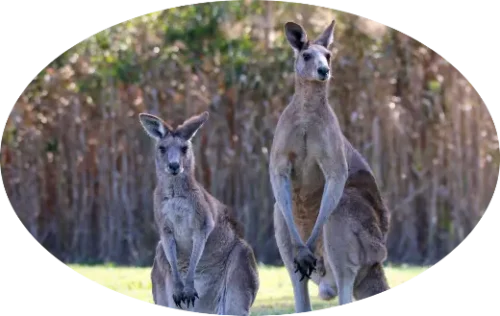

Do you have a love for wildlife and want to become actively involved in providing support for sick, injured, displaced and orphaned animals?
Wildcare has a strong community of volunteers who work together to preserving our unique wildlife whilst supporting each other. Together they cover a wide range of skills and services including rescue, transport, rehabilitation, release, emergency hotline, administration and education.
Wildcare will provide the training you need to become a registered wildlife carer free of charge, as well as provide ongoing support and mentoring throughout your journey.
Maybe you would like to get involved, giving your time and skills too? There are diverse range of roles, and you can give your time as it suits to fit in with your life.
Together, we have the power to create a truly meaningful impact on the natural world around us. Take action today and make a difference that will last for generations to come!
Continue reading and you will find more information about various roles available, as well as what motivates some of our current volunteers.
Finally, Wildcare needs volunteers as this is a big job.
Our wildlife need you.
Hopefully you will join us too!
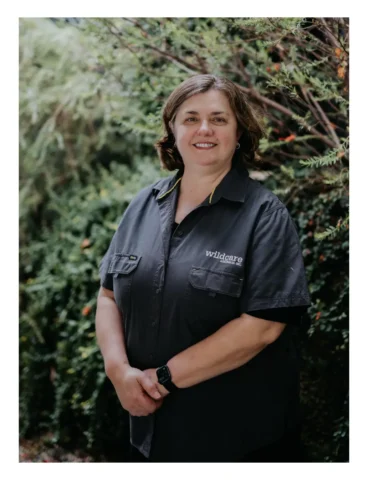
Karen Scott – President: I began my wildlife journey with Wildcare 23 years ago when I was appointed volunteer Treasurer for the group. Soon thereafter I also started volunteering as a wildlife rescuer, carer and Hotline operator.
I feel privileged to have been able to care for a wide variety of species over this time including macropods, koalas, possums, echidnas, gliders, flying foxes and bandicoots. The opportunity to nurse and care for a wild animal and return it back to its natural habitat, is a source of immense fulfillment for me. I can still recall quite vividly one night in my early volunteering journey that I was in awe of the fact that I had a kangaroo, koala, possum and a bandicoot in my house!
I have continued as a member of the Wildcare Management Committee over the past 23 years as Treasurer, Vice-President and currently as President. I am thankful that I can put my administrative and organisational skills to use to help Wildcare grow as an organisation and provide much-needed support to our incredible volunteer network.
What has made my wildlife journey particularly special is the unwavering support and camaraderie amongst the Wildcare volunteers. The shared passion for our wildlife and the common goal of making a difference has created a community that feels like a second family. The collaborative spirit amongst our volunteers inspires me every day, as we come together, combining our individual skills and resources to tackle the challenges that our wildlife face and the continually increasing need for our volunteer service.
Volunteering for a cause which I am passionate about has not only allowed me to make a meaningful impact on the lives of animals but has also enriched my own life in ways I could never have imagined.
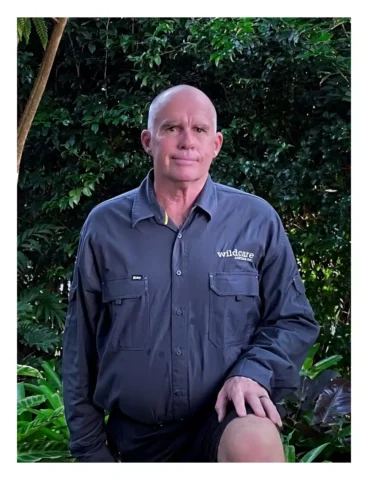
Greg St Clair – Volunteer: I have been involved with Wildcare with my wife Tania since 2019. Assisting Tania in rescues became a very regular thing. If you can’t beat em join em and in 2021 I took the plunge and completed my basic orientation and rescue course. I have never looked back and have now completed just about every Wildcare course you can find to help injured animals.
The rescuing of animals has become a true passion and retiring in 2022 allowed me to devote my time to this passion. I have rescued animals I did not know even existed in my area. From diamond tailed skinks to echidnas and koalas, from tiny brown honeyeaters and wrens to majestic black and brahminy kites. The skills I have learnt from the very experienced team at Wildcare has enabled me to safely attend, assess and rescue injured animals. I then take them to where they can have their best chance of survival and rehabilitation.
Volunteering for Wildcare has opened my eyes to the plight of the many and varied native animals that we have here in our local area. Seeing them suffer when they are injured or trapped makes you realise that someone has to care for them when they need help. Wildcare has given me the ability to be that someone. From baby birds down drains to birds entangled in fishing line in trees. From injured koalas on the ground to baby possums found alone, from frogs to blue tongue skinks I have found myself feeling for each and every one of them as I give them a lift to care and safety.
I am the Volunteer Support Coordinator for Wildcare and it is my role to ensure that each and every person in the organization has the opportunity to make a difference to the wildlife in a positive way. I also ensure there is a social aspect to Wildcare with morning teas and gatherings to chat and exchange ideas and stories of adventures or funny happenings. Wildcare has opened a world of capability to me and has opened my eyes to what I can do to help the wildlife that we a so lucky to have.
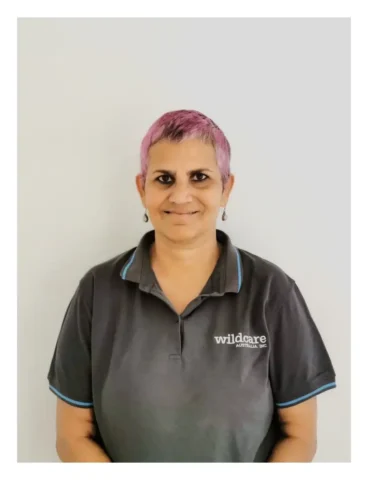
Shobha Srinivasan – Volunteer: I am a proud volunteer with Wildcare Australia. I first heard of Wildcare from one of my friends, Sally, who also is a volunteer with Wildcare. She thought it would be a good fit for me and she obviously got that very right!
I’ve been with Wildcare for about 4 years I think and wow! what do they say about time flying past when you are having fun. In my case, that’s so true! Besides learning SO much about animal AND human behaviour I’ve met some really awesome and inspirational human beings that give me such hope and positivity in my outlook on life ! All this from working mainly on the Hotline (an emergency telephone service for reporting sick and injured wildlife) and sometimes helping with rescues and with transportation of wildlife.
It’s been a steep learning curve .. and a learning that never really ends! .. leading to so much growth, knowledge and empathy for our wildlife in strife. This has been the mainstay of my time with Wildcare. Satisfaction that one has made a real difference (to an animal in pain) combined with a sense of common purpose makes volunteering with Wildcare an absolute no brainer 🙂
Our wildlife transporters play a vital role in ensuring rescued wildlife are transferred promptly for appropriate care. The role generally involves transporting animals from wildlife rescuers and carers and local vet clinics to a wildlife hospital.
This is a great way to initially get involved as wildlife will be securely contained and you need very limited equipment.
You will need a Driver’s Licence and your own vehicle.
On the Gold Coast, Wildcare coordinates a transport roster each morning and afternoon to collect wildlife from the northern Gold Coast through to the Currumbin Wildlife Hospital. There are also other ad hoc transports coordinated within the Wildcare network in all regions.
So, if you’re not sure where to start, or not feeling confident yet to handle wildlife, this is a perfect role for you.
For more information, read our Fact Sheet – Become a Volunteer Wildlife Transporter.
Our wildlife face a wide variety of threats in our urban environment so many end up needing our help. Wildlife rescuers respond to calls for sick, injured and orphaned wildlife, as well as those in immediate danger.
Rescues vary significantly – from a simple on-ground capture of a sick animal to more complex rescues involving a team of rescuers or specialised equipment.
Wildcare will provide the training and support you need, and although the role can be challenging at times, it is always rewarding.
As a rescuer you would need to have a Driver’s License, your own vehicle and have some basic equipment. Wildcare can assist with more specialised rescue equipment as you become more experienced.
When you register as a rescuer, you can nominate the days and times that you are generally available. That way you can fit your volunteer activities around your work and family commitments.
For more information, read our Fact Sheet – Become a Volunteer Wildlife Rescuer.
Wildlife carers are a dedicated team of volunteers who care for wildlife in their own homes, until they can be released back to the wild. This may be an orphaned or injured bird, an orphaned wallaby joey or a sick possum, to name a few.
Wildlife come into care for a variety of reasons from health-related issues, injuries through to newly orphaned infants. Some animals may only need a few days of care, whilst others may be in care for many months.
During their rehabilitation, the wildlife carer may need to medicate and monitor progress in conjunction with a wildlife vet or Wildcare Species Coordinator. There are a wide range of tasks to be carried out during this time such as gathering food, cleaning enclosures, regular feeds, weighing patients to monitor their progress.
Wildcare will provide training on various rehabilitation aspects and will assist you with meeting the requirements to obtain a rehabilitation permit endorsement from Wildcare. There is no charge to obtain a permit from Wildcare. Thanks to the generosity of our supporters, Wildcare is able to provide specialised food and supplements free of charge to our registered carers.
For more information, read our Fact Sheet – Become a Volunteer Wildlife Carer.
Hotline Operators play a critical role in Wildcare. The Volunteers are the first point of contact with the members of the public as they report incidents involving wildlife.
They need great communication skills as well as be able to stay calm in sometimes difficult situations.
Shifts vary in length from two hours through to overnight shifts and you are provided extensive training and coaching as well as support from other Hotline Operators.
For more information, read our Fact Sheet – Become a Hotline Operator.
If you live on property that is suitable for the safe release of rehabilitated wildlife, you may like to consider becoming a registered release site.
Some species of wildlife are ready to be released straight into suitable habitat whilst others may need to be housed in an enclosure for a short time as they adjust to their new surroundings.
Wildcare has mobile release aviaries which we are able to move to suitable properties.
For more information, read our Fact Sheet – Become a Release Site.
Running an efficient organisation such as Wildcare requires the skills and experience of a wide variety of people. There are a variety of other ways you can assist including:
• Social media content and administration
• Community events
• Asset Management
• Fundraising and sponsorship
• Education program
If you have skills or a particular interest in these areas, we would love to hear from you.