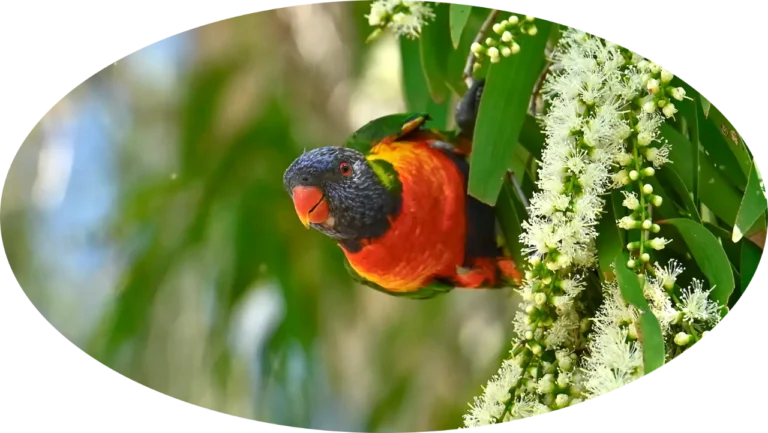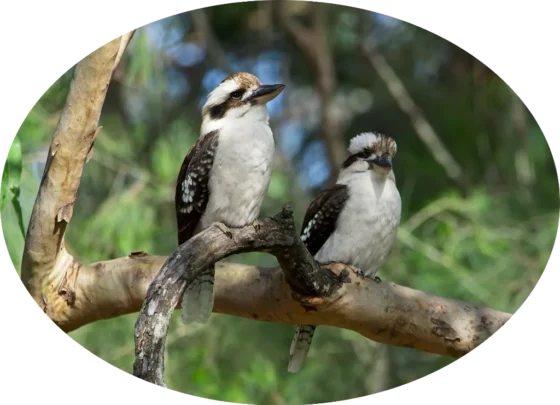


In Australia, we are extremely blessed to have such a vast array of native bird species.
There are a number of excellent bird field guides available to assist with identification as well as various smartphone and tablet App’s available for both Apple and Android devices through both iTunes and Google Play. A highly recommended book is The Australian Bird Guide by Menkhorst & Ors.
Native birds do not handle stress well so handling should be minimised at all times. Most species have a defined home range and are very territorial and for this reason, it is absolutely imperative that information regarding the exact location where a bird is rescued from is provided with any bird that comes into care.
Most common species of urban birds (such as magpies, noisy miners, lorikeets) are easily handled when they are sick or injured if you follow some simple guidelines including:
Some of our native birds are much more specialised and their rescue and handling should only be undertaken by experienced wildlife rescuers, including:
Any bird that is sick or injured will need veterinary treatment.
Some birds may be carrying a contagious disease which can risk the health of your pet birds.
During spring and summer, the most common enquiry that Wildcare receives is related to baby birds. We must consider a number of things before bringing a baby bird into care, as often they are uninjured and the parents are close-by. Removing a baby from their parents is what we call ‘bird-napping’.
Injured Baby Bird
If you have found a baby bird that appears to be sick or injured, it will need to come into care even if the parents are still tending to it as it will require veterinary treatment. Place the baby bird into a small box with a towel and transport promptly to a wildlife hospital or vet. Alternatively, contact your local wildlife rescue group.
Un-injured Baby Bird
Download our Baby Bird Poster with instructions on how to help our native baby birds and to create a make-shift nest. This poster is designed to be printed on A3 paper but can also be printed on A4.
Download our Helping Native Baby Bird information brochure.
Wildlife rescuers receive a large amount of calls each year regarding baby birds – particularly those that are learning to fly (“fledglings”).
We must make every attempt to reunite or ‘re-nest’ a healthy, uninjured baby bird with its parents. After all, there is no substitution for the care of mum and dad! With a little bit of patience and a few household items, we have learnt that in most circumstances, parents can be successfully reunited with their baby.
Here’s what you need to do:
Firstly, we need to correctly identify the bird.
Not all baby birds are raised in a nest; some are ready to take on the world the day they are born.
*Precocial chicks *
Precocial birds are born covered in down with their eyes open and can feed themselves soon after hatching. Precocial birds such as ducks, masked lapwings (plovers), swamp hens and moorhens usually nest on the ground and will stay under the watchful protection of their parents until they are independent. Some precocial chicks, such as the brush turkey, are independent from the time of hatching and receive no parental guidance at all!
Helping Precocial chicks
*Altricial chicks*
Altricial birds are completely dependent on their parents for warmth and food. They are born completely or nearly naked with their eyes closed and are cared for by their parents until they are mature enough to leave the nest. These include the majority of birds such as honeyeaters, insectivores, parrots, pigeons, doves, carnivores and most raptors. These birds usually nest in trees or hollows.
Helping altricial chicks
There are two general stages of altricial baby birds; ‘featherless’ or ‘fledgling’.
Featherless baby birds have no feathers to keep warm.
Fledgling baby birds have a significant number of adult-looking feathers. They have just left the nest and are learning to fly under the watchful eye of mum and dad who will teach them the lessons and survival skills that they will need to know as a bird; how to fly, what food to eat, how to find food and how to avoid predators.
How to re-nest or reunite baby altricial chicks with their parents
Healthy, uninjured altricial baby nestlings with considerable down or feathers and whose parents are nearby, are suitable to be re-nested and should be placed in a makeshift nest. The parents will continue to care for their baby from the new nest. Contrary to popular belief, they will not reject a baby because a human has handled it. Baby birds have been successfully reunited back with their parents many hours and even days later and the parents are glad to have them returned safely!
This method is suitable for most species of common native birds that raise their young in an open nest including magpies, crows, magpie larks and butcherbirds.
Note: Native birds that raise their young in tree hollows or closed nests (such as termite mounds), are difficult to re-nest. Species such as parrots, lorikeets, kookaburras and kingfishers have more specialised nesting requirements and these should be referred to an experienced bird rescuer for advice, as they may need to come into care so please contact your local wildlife rescue group.
What you will need:
A suitable container to use as an artificial nest – this could include:
The container must have adequate drainage in the bottom in case it rains. It should be appropriate to the size of the baby birds being re-nested.
Easy steps to making a new home:
For your own safety, do not climb a tree or large ladder to place the artificial nest in a tree. Remember, your safety comes first.
If the weather is particularly bad (e.g. very windy or rainy), it may be more appropriate for the bird to come into care temporarily.
If it is close to evening and the bird is not nocturnal, place the bird in a cardboard box and keep warm and quiet overnight (it will sleep) and then try reuniting it with its parents at first light the following morning. Remember, please don’t provide any food or water as native birds have very specialised diets. It’s best to leave the parents to feed the baby in the morning.
Reasons why baby birds may need to come into care:
There are some instances where we do need to intervene and bring a baby bird into care for assessment, treatment and possibly hand-rearing. Baby birds that show the following signs should come into care:
In these instances, place the bird into a ventilated small box with a soft towel on the bottom and place into a warm, dark and quiet location. Do not provide any food or water. Take to your closest wildlife hospital, vet or contact a local wildlife rescue group.
Below is a list of the most common scenarios regarding bird rescues that our volunteers encounter.
Injured (e.g.hit by car, unknown cause)
Birds are often found on the ground unable to fly and appear to be injured. Often you may not know the exact reason for the injuries.
If the bird has any obvious injuries (e.g. broken wing or leg, evidence of blood) – it will it require immediate veterinary attention. Please take the bird to a wildlife hospital or vet as soon as possible. If you are unable to transport it, please contact a local wildlife rescue group.
It is important to remember that birds feel pain the same as mammals do, including us! Prompt veterinary attention will ensure that the bird will have the best possible chance of recovery. Local vet clinics and wildlife hospitals, accept sick and injured wildlife free of charge.
Hitting a window
This is a common occurrence during breeding season as many bird species are territorial and will often attack their own reflection in a window.
If the bird is able to captured, it should be placed into a box and transported to a wildlife hospital or vet. Birds can sustain significant injuries when they hit a window which may not always be visible. Even if the bird appears dazed and then improves, they should still receive veterinary assessment.
Unable to fly
The main reasons why a bird is unable to fly is because it is either injured, very unwell or is a dependent baby.
If the bird is an adult and cannot fly, then it is likely sick or injured. If it is safe, and you feel confident to do so, capture the bird and take it to a wildlife hospital or vet. If the bird looks mostly like its adult version but with a few fluffy feathers or not as brilliant colours, it is most likely a fledgling. Fledgling birds tire easily whilst learning to fly and do not have the same capacity to fly as adults. If it is uninjured, place the bird in a bushy tree or shrub for protection and keep an eye out for the parent birds to ensure that they continue to tend to it. Remember to keep pet dogs and cats away from the area.
Bird that repeatedly attacks its own reflection in a window
This display is generally territorial behaviour as the bird sees its own reflection as a rival.
To stop this behaviour, it is necessary to cover the bird’s reflection. This may take some experimentation on your part. If only one window is involved, some simple ideas include:
These steps are generally only required for a short period during breeding season to stop the cycle of the bird’s territorial behaviour.
For additional information, please check out the information on the website: Safe Wings
Encounter with a cat
All birds that have been in contact with a cat require veterinary attention and antibiotics. Although it may appear that the cat did not harm the bird, cats have very fine, sharp teeth that easily penetrate the bird’s skin. These punctures heal over very quickly trapping the bacteria in the bird’s body. There will often be no sign of blood and perhaps only a few ruffled feathers.
Place the bird into a suitably sized cardboard box with a towel on the bottom and transport to a wildlife hospital or vet as soon as possible. It is important to tell the veterinary staff that the bird was in contact with a cat so they can commence appropriate treatment.
Birds near a busy road
We often receive calls about parent birds with babies near a busy road. Whilst our natural instinct is to protect them and relocate them to a safer area, we are unable to do this as this is their natural behaviour. Not only that, but wildlife volunteers are not permitted by law to relocate healthy wildlife.
Some species, such as masked lapwings (plovers), and Bush Stone-curlews, nest in busy locations, such as on the sides of major roads and highways, roundabouts and in busy shopping centre carparks. Ducks will often look for food on the side of busy roads with their ducklings.
Wildlife rescuers cannot conduct rescues on highways without authority from the State Transport Department due to the high risk to human safety.
Protective parent birds
The most common species that display aggressive behaviour are the Masked Lapwing (plover), Australian Magpie and Grey Butcherbird. This behaviour is a natural response to the parents protecting their eggs or young.
Although their behaviour can be very frustrating at times, it is generally short-lived and will subside once the young birds have left the nest. It generally does not last longer than 4-6 weeks. With Masked Lapwings, the behaviour generally ceases once the babies have hatched and the parents will lead them into nearby bushland.
If you do have an protective bird nearby, try the following:
If you are encountering a bird that is attacking outside of the breeding season, or is attacking at a school or aged-care home (or similar), and wish to have the bird relocated, you will need to contact the Department of Environment Tourism Science and Innovation for further assistance.
Wildlife volunteers are not licensed to relocate wildlife in these situations and can only be undertaken by a person with an appropriate Damage Mitigation Permit.
Eggs on the ground
Some species of birds lay their eggs on the ground such as Masked Lapwings (plovers) and Bush Stone-curlews. This is a natural occurrence, and they should not be disturbed. If you are concerned the eggs will be damaged, you can try the following:
If eggs are on the ground as a result of a nest which has fallen and broken apart, ask the caller to make a “makeshift” nest out of an ice-cream container as described in the Baby Birds section previously. This is not always effective however as the parents will often abandon the nest.If you have found a nest on the ground which has fallen from a tree, please contact our hotline or your local wildlife rescue group for advice
Birds trapped in a building
Birds are often reported as being trapped in large factories, houses or retail outlets.
Large buildings (such as factories or houses with high ceilings)
Small buildings (such as standard houses or shops)
Birds entangled in fishing line
These reports generally relate to sea and water birds that have fishing line entangled around their legs and/or wings.
If the bird is not contained, please keep an eye on it from a safe distance. Contact your local wildlife rescue group immediately who will put you in touch with a specialised wildlife rescuer.
DO NOT cut the fishing line, particularly if it has been swallowed as the bird may swallow it further which will cause further damage.
If you have already contained the bird, take it immediately to a wildlife hospital or vet.
If the bird is still able to fly, please contact a local wildlife rescue group. They will generally have specially trained volunteers with specialised equipment and techniques to lure and capture these birds so that they can receive urgent treatment.
Birds washed up on shore
Some migratory birds come to shore exhausted after a long migration, particularly during times of bad weather out at sea. Periodically, these occurrences will result in hundreds of birds coming to shore.
As these birds are highly specialised, they are best taken to a wildlife hospital or contact a local wildlife rescue group.
Please do not provide sea birds with fresh water.
Bird found with a band on its leg
There are three main reasons why birds will be banded.
If the bird is injured – take the bird to a wildlife hospital or vet and point out that it is banded. They will then contact the ABBBS with the particulars recorded on the band.
If the bird is dead – Remove the band and provide the details to the ABBBS
Australian Bat & Bird Banding Scheme – there is an Online Reporting Form available and detailed instructions on what information is recorded. The ABBBS can provide details of where and when the bird was banded.
Wildlife rescuers do not have the resources to respond to calls involving pet birds or racing pigeons. They will however respond to wild birds that are banded under a scientific study.
Brush Turkey chicks can fly shortly after hatching and are independent from the time that they hatch.
If the chick is injured, or has been in contact with a cat or dog please take it a wildlife hospital or vet.
If the chick is un-injured and is bright and alert, please return the chick to where it was found.
Download the Infographic on Australian Brush Turkey Babies
During most times of the year, Brush Turkeys scratch around in garden beds simply looking for food such as worms and insects.
During breeding season, male Brush Turkeys may build a mound. Once they start to build a mound, they are difficult to deter.
Below is some general advice to help in these circumstances:
Wildcare is not licensed to remove Brush Turkeys.
Adult ducks are often considered a nuisance to residents when they visit backyard pools.
Some advice that may assist include:
Quick action is needed in this circumstance in order to prevent the ducklings from being injured or killed.
If you require assistance with removing ducklings from a pool, please contact a local wildlife rescue group.
Ducklings are often reported as being orphaned. Check carefully in the area for any sign of the parent(s) as the first preference is to reunite the duckling with its parents.
Please do NOT release the duckling into water; they do not have water-proof feathers and will die from pneumonia if they become wet and cold.
If they are genuinely orphaned, they should be placed in a cardboard box and taken to a wildlife carer. Ducklings are particularly prone to stress so should be handled as little as possible. They are also very good at jumping so should be contained in a secure box.
Sulphur-crested Cockatoos commonly succumb to Psittacine Beak and Feather Disease (also known as Psittacine Circovirus Disease).
This disease is highly contagious to other bird species, and attacks the bird’s immune system. This results in missing feathers, an overgrown beak and an overall appearance of looking ill.
There is no cure for the disease and they often succumb to secondary infections such as pneumonia.
If the bird is on the ground and unable to fly:
If the bird is still unable to fly, it is often difficult to capture them.
Wildcare often receives calls from the public asking us to make a note of a pet bird that has been lost or found. As a volunteer group, we do not have the resources to be able to do this, however we recommend that you contact the following: