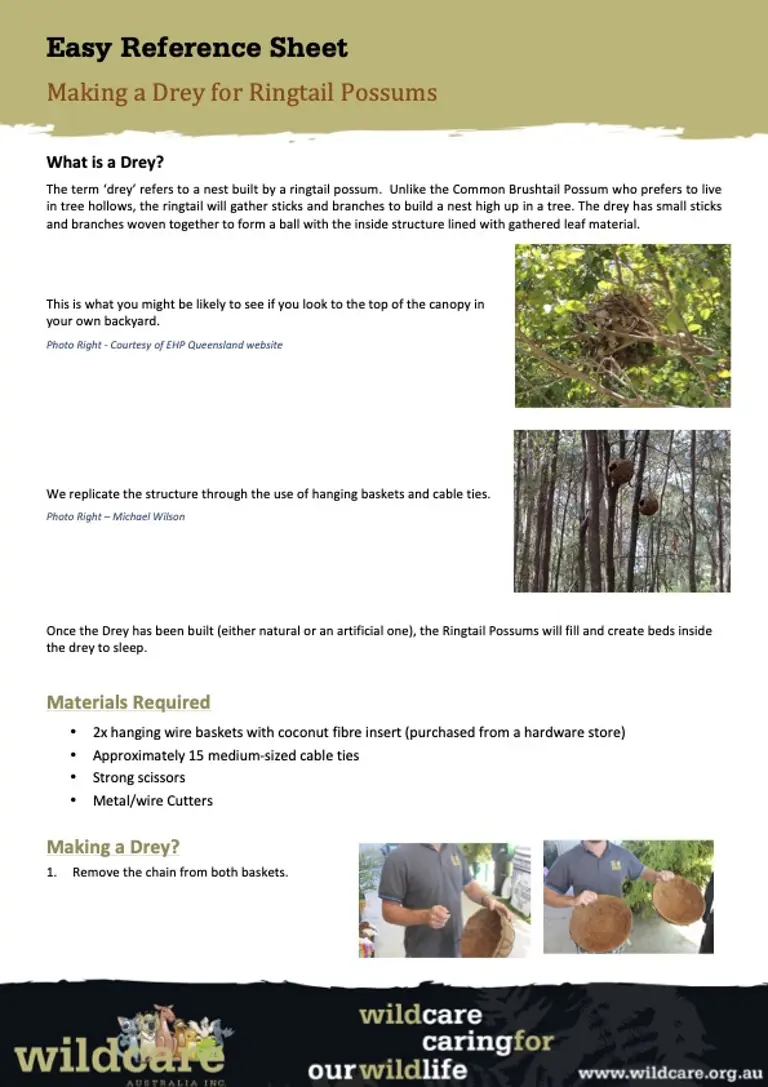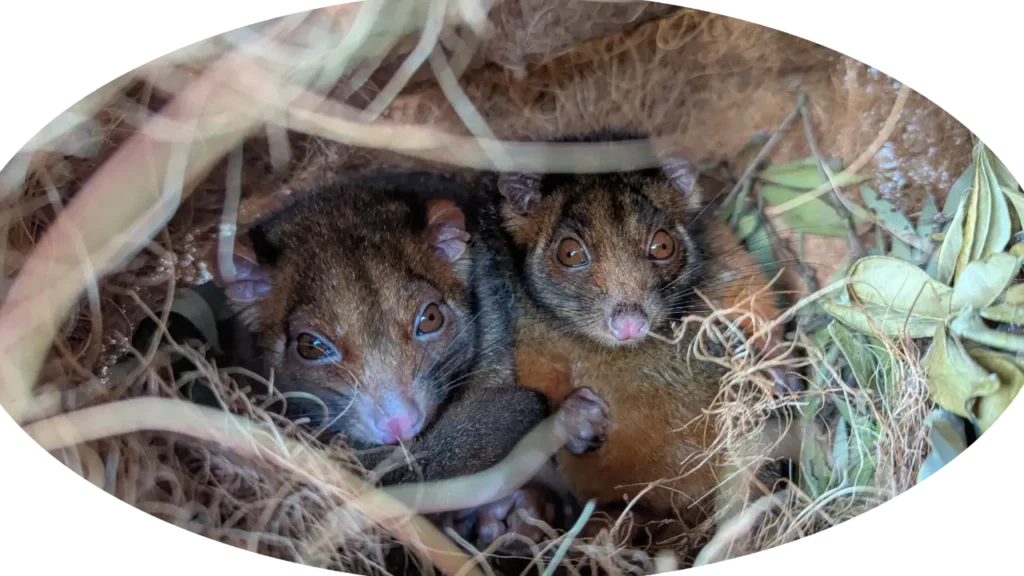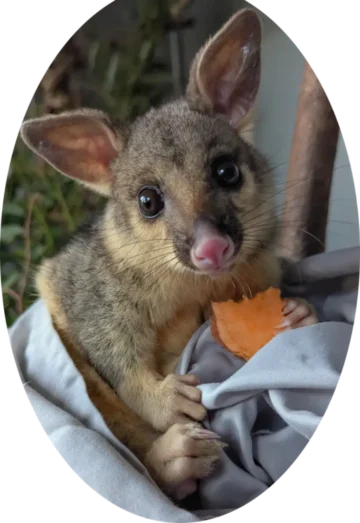


A possum is a mammal, specifically a marsupial, that is nocturnal and arboreal (lives in trees). Some possums have a gliding membrane and are referred to as gliders. The largest of the possums in South-east Queensland is the Short-eared Brushtail Possum, (Trichosurus caninus) which may grow to about 4.5 kg. The smallest are the Feathertail Gliders (Acrobates pygmaeus and Acrobates frontalis), which may reach about 15 grams and 19 grams respectively. There is considerable colour variation both between, and in some cases, such as the Greater Glider, within species. Queensland possums tend to be smaller than their southern counterparts.
As possums and gliders are marsupials, it is important that deceased females are always checked for live pouch young. Common Ringtail Possums and some gliding species usually have twins, but may have one or three joeys.
All species are arboreal (live in trees) and nocturnal (active at night). They all have strong home ranges and some are extremely territorial so it is imperative that possums are never relocated from their home.
The Common Brushtail Possum is typically a solitary animal however Common Ringtail Possums and Short-eared Brushtail Possums are more social within their family group. Gliders also live in social groups, with the exception of the Greater Glider.
There are 11 species of possum found in South-east Queensland including:
There are varied reasons why possums and gliders need our help, many of which are directly as a result of human impacts. We have listed below some of the common reasons why they need to be rescued and have provided some tips as to how YOU can help.
Collision with a vehicle
Any possum or glider that has been hit by a car, will need urgent veterinary treatment as they are likely to have sustained life-threatening injuries.
If it is safe to do so, remove the possum from the road. Using a towel, blanket or jumper, wrap the possum so that the head is covered and place it into a secure box or bag. Take the possum to your nearest vet clinic or wildlife hospital. Alternatively contact a local wildlife rescue group for assistance.
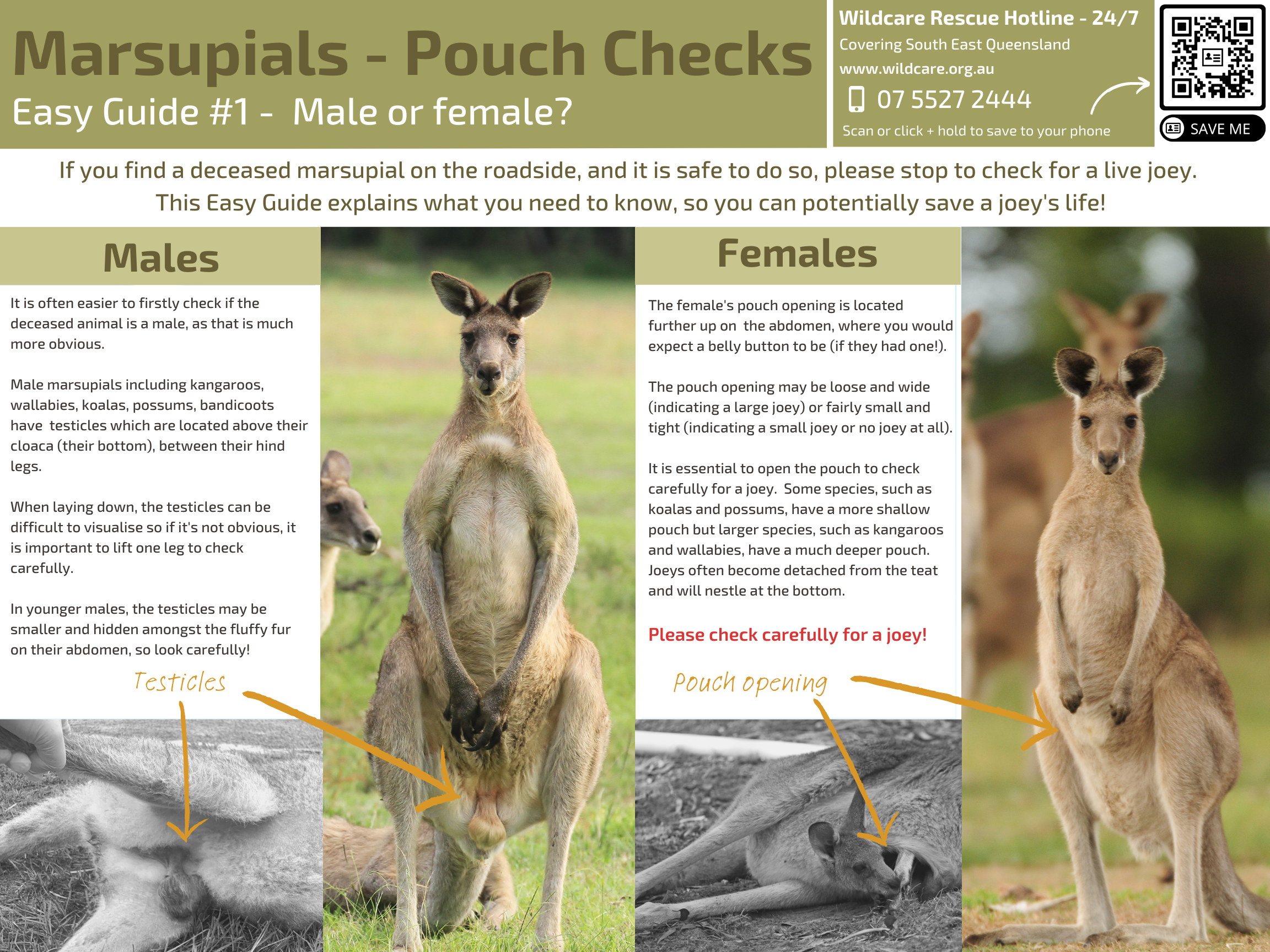
If the possum dies, please check if it is a male or female. If a female, carefully check inside the pouch for any live joeys. You can refer to our Easy Guides listed below for detailed information on how to check if a male or female, and how to do a pouch check.
Orphaned Joey
If a live joey is found, it is important they are transferred to a licensed wildlife carer or wildlife hospital as soon as possible. All wildlife suffer from stress easily which can have a negative impact on the survival of the joey.
Orphaned joeys have highly specialised heating and feeding requirements and are often suffering from dehydration and hypothermia.
If you find a dead female possum/glider and the joey is alive and still in the mother’s pouch:
If the joey is no longer in the pouch:
If you find a dependent joey on its own with no sign of the mother:
If you find a deceased possum or glider and aren’t sure how to check if the animal is a male or female, you can refer to our Easy Guides on pouch checks below:


Encounter with a dog or cat
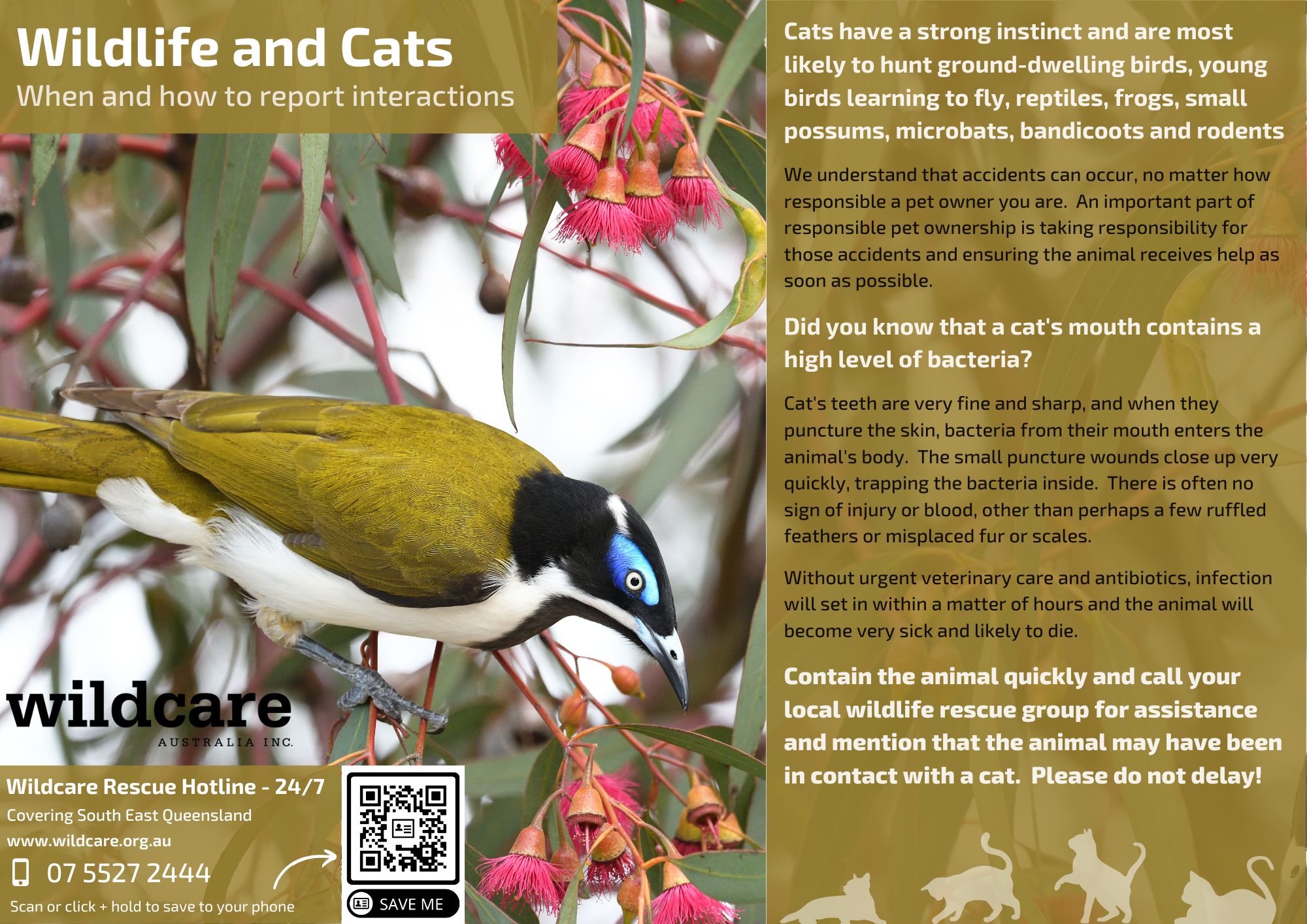
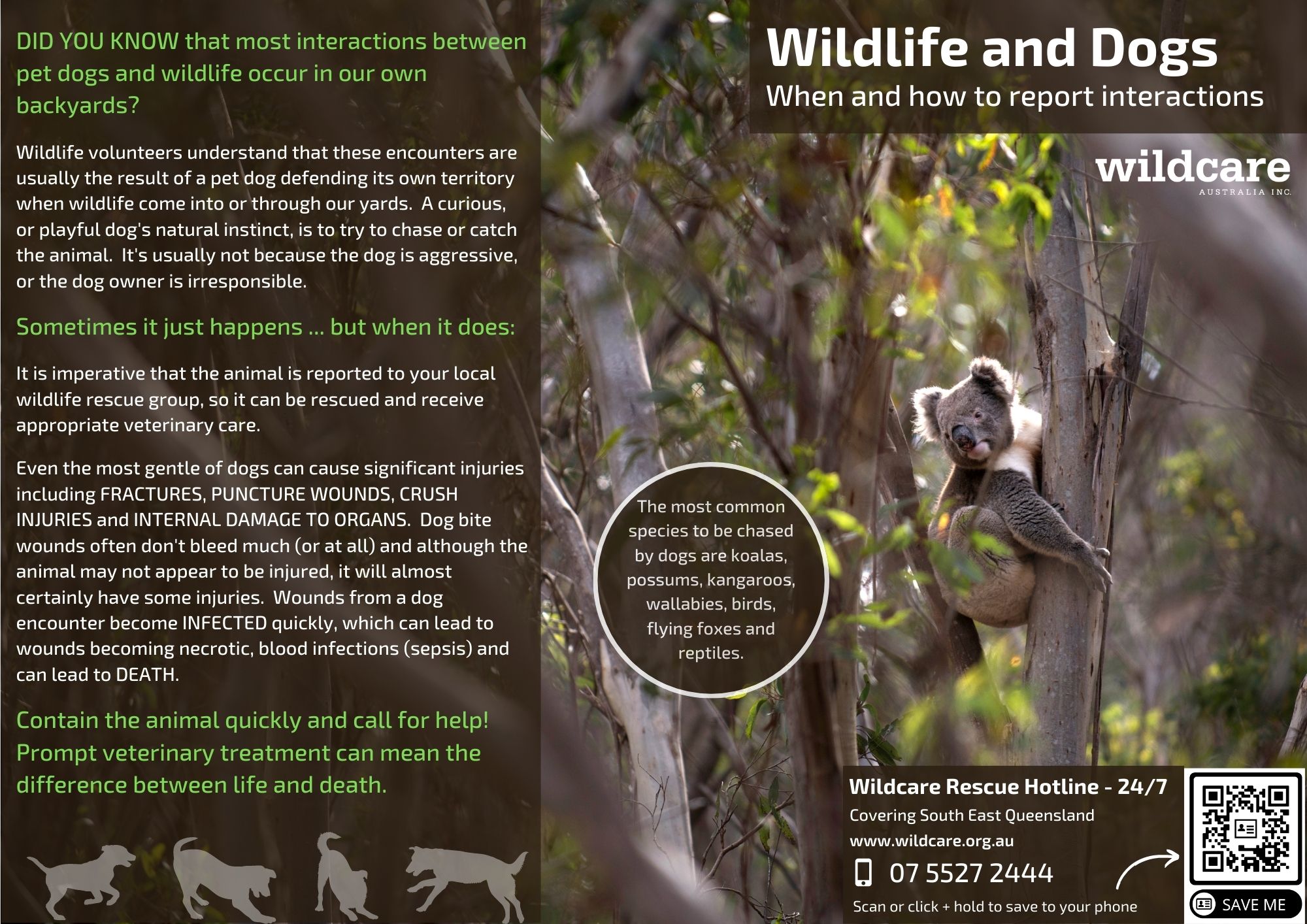
It is not uncommon for our pet dogs or cats to encounter our native wildlife, particularly in urban areas. Although they may not intentionally try to harm the animal, our pet’s curiosity and playful nature may result in injuries to the animal when they are chased or picked up.
Possums and gliders that have had an interaction with a dog or cat, must receive urgent vet care, even if there is no visible sign of injury. They will often sustain severe injury such as fractures, internal bleeding and infection. They can also die from shock if not treated quickly.
Secure the possum or glider in a pillowcase or box. Take the animal immediately to a wildlife hospital or vet. It is important to let the vet know that it had an encounter with your pet so they know to check for puncture wounds and to commence immediate antibiotic treatment.
As possums and gliders are nocturnal, these unfortunate incidents usually occur at night. In South-east Queensland, there are a several 24-hour vet clinics available that accept wildlife free of charge . Please contact the Wildcare Hotline on 07 5527 2444 and we can put you in touch with your closest vet clinic.
Suspected rodenticide poisoning
Possums frequently ingest rodenticide (rat bait), which has been inadvertently left in open areas to control rodents.
Signs that a possum may have ingested poison include:
If you suspect that a possum has been poisoned, please contain the possum in a box or pet carrier and transport immediately to a wildlife hospital or vet. Alternatively contact your local wildlife rescue group urgently.
Possum out during the day (displaced)
Possums frequently become displaced during the day when their nest or roosting site is disturbed.
If the possum is bright, alert and moving well, it may be attempting to find a new roosting site after being disturbed. Ensure that all pet dogs and cats are contained to the house and observe the possum from a distance to ensure that it finds a safe place to rest.
If the possum is out in the open and not moving well or does not quickly climb a tree or run away when approached, it may be sick or injured. If you are confident to do so, contain the possum in a box or pet carrier and take it to your closest wildlife hospital or vet. If you’re not able to do that, place a upturned washing basket over the top of the animal (weighted with a brick so the possum cannot flip the basket off) to keep it contained and contact your local wildlife rescue group.
Possum in a chimney
Possums sometimes get caught in chimneys when they fall down the flue. If the sides are smooth, it will prevent the possum from climbing back out.
If the chimney is safely accessible from above, a rope or sheet secured from above and dangled down into the chimney may give the possum something to grip onto and climb up. The possum may also be able to be rescued from within the fire place below using a trap baited with food or with gloves and a towel – beware of claws and teeth.
In some situations, part of the chimney may need to be dismantled to safely remove the possum. If you need further advice in this situation, please contact the Wildcare Hotline on 07 5527 2444 or your local wildlife rescue group.
Skin infection (Dermatitis)
Dermatitis is a condition commonly found amongst Brushtail possum populations in South-east Queensland. Often these wounds look like burns or appear that the skin has been scalped.
If you know where the possum sleeps through the day, it may be possible to capture the animal while it is sleeping. Alternatively, using a humane possum trap often works to capture the possum so that appropriate treatment can be sought.
Please contact your local wildlife rescue group for assistance in this situation.
Click on the image below to view our infographic which explains more about Exudative Dermatitis and how you can help them.

Relocating possums
As a native animal, possums are protected by law. They have very strong home ranges, can be territorial and should not be relocated. If relocated, they will try to return to their home which puts them at a much higher risk of being hit by a vehicle or sustaining injuries from a dog.
In Queensland, wildlife volunteers are not licensed to relocate any species of wildlife.
Most of the reasons why people want to relocate a possum, can be easily mitigated by installing appropriate nest boxes which will provide a more suitable place for them to shelter.
If a healthy possum needs to be removed from a roof or ceiling, please seek advice from a reputable contractor who holds an appropriate Damage Mitigation Permit from DETSI. The contractor will be able to assist with safely and humanely removing the possum from the roof cavity, fixing the entry point where the possum is gaining entry, and instal a suitable possum box in your yard for the possum to reside in. Wildcare does not support the relocation of any wildlife.
Possums in roof or ceiling
Possums rely on tree hollows for nesting and sheltering sites. In urban areas however these are becoming more difficult to find and possums often resort to sheltering in ceilings, garages or sheds. Possums that reside in roofs are generally Common Brushtail Possums. Ringtail Possums make dreys out of leaves and bark and are far less likely to take up residence in a ceiling.
Here are some simple steps to take so both your household and your local possum can live more harmoniously together:
Keep any overhanging branches away from the roof line as these provide easy access to the roof for all animals, including rodents.
Please consider providing a new home for the possum by mounting a possum box high in a nearby tree. It may help to put a bit of food (i.e. carrot, almonds) in the new box.
Remember: Possums only look to human habitation because their preferred sleeping places (tree hollows) do not exist (trees with hollows have been felled) or existing hollows are already occupied. If you require assistance with removing a possum from the roof, please contact your local wildlife rescue group who will be able to recommend a reliable specialist.
Is it a possum in your roof or could it be a rat?
Our Hotline receive many calls from residents concerned that there is a possum in their roof when in fact, it is a rat.
Ways to help distinguish whether the animal is a possum or rat include:
A professional wildlife business will be able to assist you in determining the identity of the animal and offer appropriate solutions.
With the loss of habitat for residential and commercial development, agriculture and forestry, tree hollows are in short supply and the few remaining hollows will be in great demand, for not only possums but also by birds, bats, and bees.
There are a few important points to keep in mind, when you are making or buying a possum box and installing it.
If you are interested in providing nest boxes for a variety of visitors to your garden, there are a number of options available. We have listed below a few suggestions for the South-east Queensland region.
If you have the equipment and skills to make nest boxes yourself, you can download our Easy Reference Sheet on building your own possum box HERE.
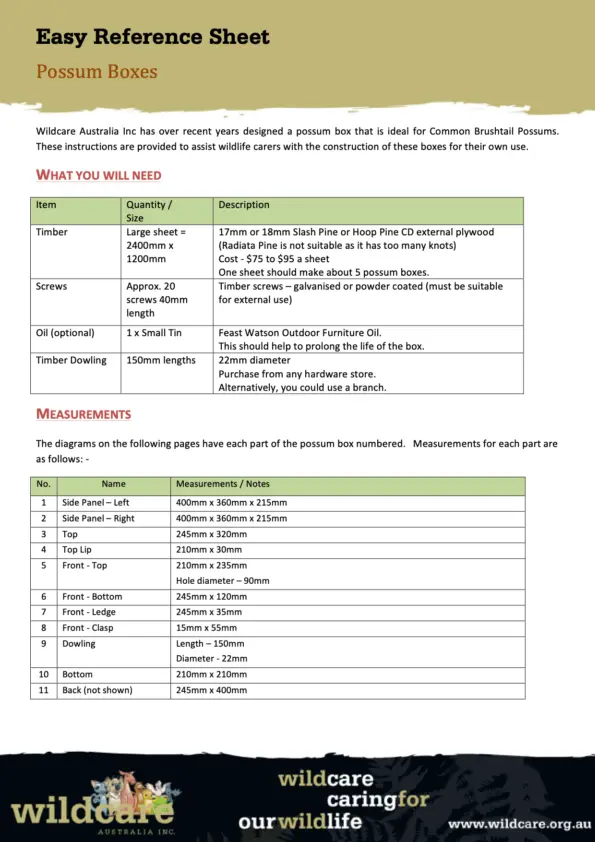
Below are some links which also include some instructions on making your own nest boxes:
If you have ringtail possums in your area, you can easily make some additional homes for them by making an artificial drey.
You can download our Easy Reference Sheet at the link below which includes detailed instructions.
This is a great (and cheap!) activity to do with your kids! It doesn’t require any power tools and all the equipment needed is readily available from Bunnings or your local discount store.